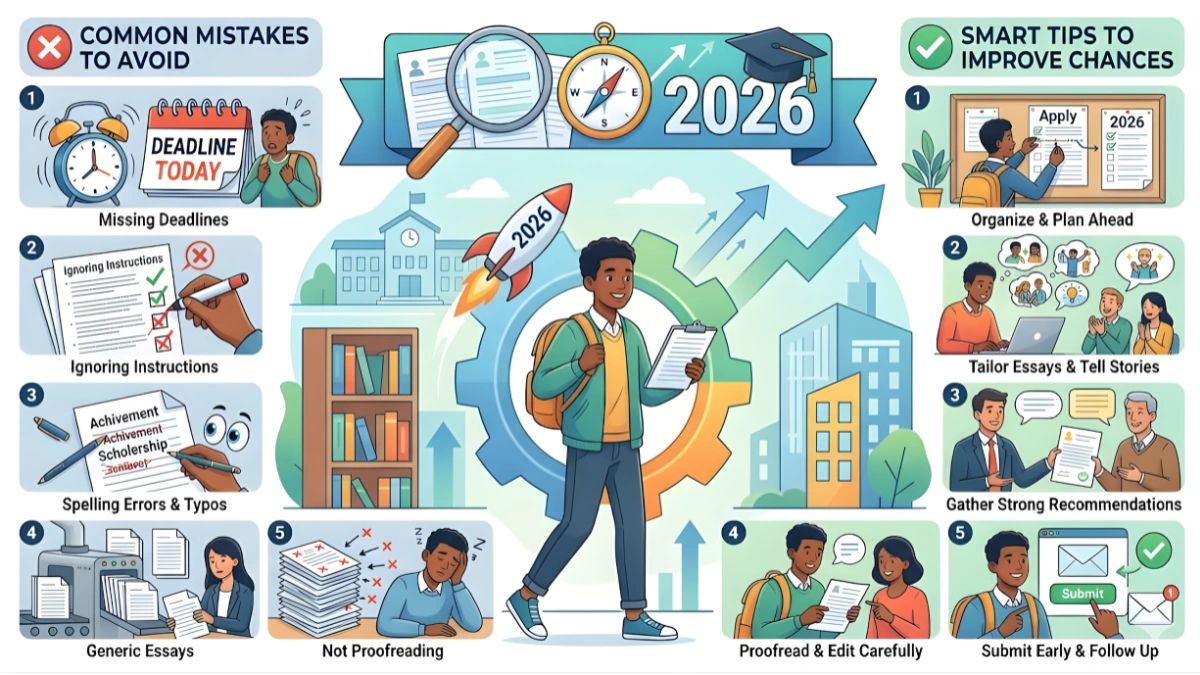
Scholarship applications often fail not because students are academically weak, but because avoidable mistakes reduce the overall quality of the submission. In 2026, scholarship competition has become much stronger because more students are applying for limited funding opportunities across major countries and universities. Even highly deserving applicants can lose strong opportunities if deadlines are missed, essays are generic, or supporting documents are poorly prepared. Scholarship committees usually compare many candidates with similar grades, so small mistakes can create major disadvantages during final selection. Understanding common scholarship errors early helps students submit stronger, more competitive applications.
Applying Too Late Reduces Scholarship Success
One of the most common mistakes is starting scholarship preparation too close to the deadline. Many students focus first on university admission and only later realize that scholarship deadlines may already be near or closed. This creates rushed essays, incomplete documentation, and lower application quality. Strong scholarship applications usually need several weeks of preparation because academic papers, recommendation letters, and personal statements all require careful work. Students who begin early usually submit stronger and more organized applications.
Using the Same Statement for Every Scholarship Weakens the Application
A generic statement of purpose is one of the fastest ways to reduce scholarship strength because selection committees want to see why the student fits that specific scholarship. Chevening Scholarship and similar major scholarships strongly value clear alignment between the student’s goals and the scholarship’s mission. A copied essay often sounds weak because it does not explain country choice, career impact, or scholarship relevance properly.
| Common Mistake | Why It Happens | Better Approach |
|---|---|---|
| Applying too late | Poor deadline planning | Prepare months early |
| Generic statement of purpose | Copying same essay everywhere | Customize for each scholarship |
| Weak recommendation letters | Choosing wrong referees | Select strong academic or professional references |
| Ignoring eligibility rules | Applying without checking criteria | Match scholarship requirements carefully |
| Incomplete documents | Missing required paperwork | Verify checklist before submission |
Choosing Weak Recommendation Letters Hurts Credibility
Many students request recommendation letters from people who know them only casually. Strong recommendation letters should come from professors, supervisors, or employers who can describe specific strengths, achievements, and work quality. A short generic recommendation often performs weakly because it adds little real credibility.
Ignoring Eligibility Rules Creates Immediate Rejection
Scholarships often have strict requirements regarding nationality, degree level, work experience, or subject area. Applying without checking eligibility wastes time because many systems reject applications automatically when criteria are not met.
Incomplete Documents Create Avoidable Rejection
Fulbright Program and many competitive scholarships require exact document formats, official transcripts, and complete paperwork. Even one missing document can weaken an otherwise strong application.
Why Careful Review Matters Before Submission
The strongest applicants usually review every document multiple times before submission because small mistakes can affect serious opportunities.
Conclusion: Most scholarship application failures happen because of avoidable mistakes, and careful preparation often improves success more than students expect.
Disclaimer: Scholarship requirements, document formats, and deadlines vary by country, program, and funding body.